Friday, November 27, 2009

Things are Greening Up

I know it's the end of November, but the plants outside seem to think spring is on the way. Sure, the days are still getting shorter, but they are also getting milder. Even some of the nights have been mild. So, what else is a plant to conclude but that spring is just around the corner?


New shoot on elderberry.


Comfrey - sending up some greenery.

New leaves for the hollyhocks.

Golden Marguerite with plenty of new growth.


I keep hoping it will snow soon. On the one hand, it's been awfully nice to not have the furnace really going (my house is about 58*F...depending on where you are, of course; some areas are likely closer to 48*F), but it is the end of November, and we should have snow. Despite the pervasive dampness in the air, actual moisture accumulation so far this month has been less than two inches.

Global warming? Considering that mild winters have been occuring with greater frequency lately, it sure seems like it.

Here are some interesting facts to consider (a la National Geographic Magazine, although I've seen them elsewhere, too):

* Most of the CO2 emissions that are responsible for climate change come from the burning of fossil fuels (no news there);

* Even if we maintained the CO2 levels we emit today (go no higher), we are releasing CO2 into the atmosphere nearly twice as fast as the planet can remove it (plants, soils, ocean, sediments and rocks);

* If we stopped emissions completely today (ha), it will still take centuries for plants and the oceans to absorb most our man-made CO2, and it will take millennia for the rest to be removed by rocks and sediment.

In other words, it looks like nothing we do now will stop this boulder from rolling down the mountain. We are going to have to change the way we live - not to fix things, but to live with the changes we have wrought. Some of us will come out okay, but much of the world will be facing potentially cataclysmic changes (no water, or too much water, for example).

Does this mean we shouldn't even bother to try to cut our emissions? Absolutely not. What we do now will not likely make noticeable changes in our own lifetimes. We MUST start to live today for those who will be around many generations from now. If we don't start living today for the future, there might not be a future for us.

This is one of the biggest problems I see with humanity today: so few of us see beyond our own immediate future. For some, this is understandable (those who live in poverty-stricken lands, where food and water are scarce). For others (mostly the Western world), it is a choice: we choose to be ignorant and selfish in our needs and wants.

For example, I meet people all the time who absolutely refuse to recycle. REFUSE! I just don't understand it. It's not like it costs anything to separate our trash into recyclables and genuine garbage. Sure, it can be a hassle sometimes, but it has so many benefits. And don't even get me started on composting!

I'm probably preaching to the choir here, but maybe some day this message will get around to everyone, and we will all see that our wants (not needs) are superfluous. It's a matter of learning the difference between "need" and "want", a difficult concept in our modern society where everything is so readily accessible to so many of us.

Alrighty - enough of my rant. Snow is in the forecast for tonight, and we are scrambling here at work to get out shovels, put up winter signs, and batten down the hatches just in case winter finally arrives. I've counted and catalogued our snowshoes, so we are ready. Bring it on!

Wednesday, November 25, 2009

The Scat Rap

I love scat. Not in an weird, there's-something-wrong-with-this-person way, but in a naturalist's curiosity sort of way. It's a great find when one's out on a ramble, for it can tell one what animals have been out and about, what they've been eating, etc. It's good stuff.

Anyway, many moons ago a group got together and wrote The Scat Rap, which a great song about scat, and one that kids love. I'm sharing it here with you all, just in case some other naturalists out there would like to add it to their bags of tricks. Enjoy.

Scat Rap
(1988, Andy Bennett, Mary Keebler, Rodd Pemble, Doug Elliott, Billy Jonas)

Chorus:
It starts with an “s” and it ends with a “t”
It comes out of you and comes out of me
I know what you’re thinking, you can call it that
But let’s be scientific and call it scat.

Verses:
You’re walking through the woods and your nose goes “ooooo”
Must be some critter’s scat’s near you
It may seem gross but it’s okay
They ain’t got no place to flush it away.

Down the trial something’s lying on the ground
Nature’s tootsie roll all long ad brown
Don’t wrinkle your nose, don’t lose your lunch
Break it apart, you might learn a bunch
Don’t use your fingers, use a stick
Keep it sanitary now that’s the trick

If you wanna find out what animals eat
Take a good look at what they excrete
Stuck in the scat are all kinds of clues
Parts of the food their bodies can’t use
Like bones and fur (2x)
Hard berries and seeds (2x)
Crawfish shells, ouch! (2x)
Grass fibers and weeds (2x)

Possum up in a ‘simmon tree
Eating all the ‘simmons he could see
Backed his butt into the weeds
His scat was nothing but ‘simmon seeds

Down by the creek on a hollow log
Scat full of berries and bones of a frog
Late last night he was out with the moon
Wading in the creek it was Mr. Raccoon

You’re driving your car by a woods or a field
Scat goes splat on your windshield
It’s full of seeds, all purple and white
You just got bombed by a bird in flight


Peas porridge hot, peas porridge cold
Scat on the trail two minutes old
Two minutes old, is this a joke?
No, it’s still warm, look at it smoke
Cat scat, rat scat, bat scat, too
All god’s chillum do scat a lot, too

Peas porridge hot, peas porridge cold
Scat in the woodlot nine days old
Nine days old, how can you tell?
Getting kinda dry and not much smell
Dog doo, frog doo, hog doo, too
All god’s chillum do a doodley do

Peas porridge hot, peas porridge cold
Scat in a cave 1000 years old
1000 years old, could that be right?
Sure that’s no jive: petrified copralite
Mole scat, vole scat, bear scat more
There’s so darn many kinds of spoor

Sneaking through the woods be quiet now, shish!
Take a quiet step – something goes squish
Don’t put it in your mouth, it ain’t delish
Let’s put some in a Petri dish
Look through a microscope, what do you see?
Microscopic organisms 1, 2, 3
Bacillus, streptococcus, and E. coli
They eat scat and then they die
Don’t you worry, no need to cry
They ain’t that different from you and I

If you want to know who was out and around
Take a long hard look at the scat on the ground
It tells us what they eat, tells us who they are
That’s what we know about scat so far

The Breakfast Rush

I heard a red-winged blackbird calling "conker-REEE" a couple weeks ago, so I wasn't totally surprised to see this lone male at my feeders this morning. He was helping himself to the blackoil sunflower seeds, oblivious to the other greedy visitors who flew in and tried to bully him away.


Yes, those bullies were evening grosbeaks. They have been in the neighborhood for a few weeks now, but this is the first I've seen them at the feeders. They even chased the blue jays away - a real feat! If you look closely, you'll also see a brave chickadee and a timid goldfinch in the photo (and the blackbird, clinging to the blue feeder). The goldfinches finally gave up at this feeding station (even though the nyjer feeder was not being used by anyone else) and went to the nearby peanut feeder, where I was unable to photograph them (wrong angle, being so close to the house).


Despite their bullying nature, and their hoover-like feeding habits, I do like evening grosbeaks. They come into their full glorious colors by mid-winter and are such a joy to see at the feeders. Between them and the blue jays, it can be a very colorful sight. Now, if only I could entice our pair of cardinals to come to my feeders...

Although, now that I think of it, I haven't heard the cardinals in quite some time. I wonder if they've finally given up on Newcomb as simply too cold. HM. I thought we had gotten up to two pairs in town, but maybe they've moved on to greener pastures (or maybe our growing feral cat population took 'em out). I'll have to keep an eye and an ear peeled for them.

Tuesday, November 24, 2009

Afternoon with the Blue Jays

It was a sunny afternoon and the Jays were in the 'hood. I couldn't resist a) watching them extricate peanuts from the peanut feeder and b) trying to capture it "on film." So, here we go...


First, the approach. "I see the nuts. I want the nuts. Gotta get the nuts."


Step Two: Assess the Situation


Step Three: Make sure there are no spies around to steal your technique:


Step Four: grab the biggest nut you can find and pull.


Step Five: Fly away with the bootie!


Sometimes the rest of the family shows up. Things can get out of hand. Sharing is not in their vocabulary.


It's MINE! Go away and find your own peanut feeder!


Sometimes you cannot get a hold of a whole nut, and you have to work your way through the shell instead.


Keep trying. Whack-whack-whack!


Success!!! Swallow the nut whole and grab another.


The clean-up crew is always on hand to grab any nuts that fall on the ground.


Blue jays (Cyanonsitta cristata) are amazing birds. Members of the Corvid family, which includes crows and ravens, they are highly intelligent. You can see this in the way they assess situations, especially if food is involved.

Lots of people don't like Corvids. Instead of seeing highly intelligent birds, they see "mean" birds. We have to keep in mind that terms such as "mean" and "cruel" are human labels. We really shouldn't use them to describe animals and their behaviors.

One of the things that many people don't like is that Corvids have been known to eat eggs from other birds' nests, or even nestlings. Blue jays are not exempt from this habit, but the greater part of their diet consists of nuts, seeds, grains and insects. I think eggs and such make up less than 1% of their diet, and it's probably more of an opportunistic thing, rather than a regular habit.

One of the really cool things about blue jays is their gular pouch. This structure is essentially a sac that is located beneath the bird's tongue and extends down the throat to the upper portion of the esophagus. The purpose of this pouch is storage, and anyone who has watched jays at their feeders will readily agree as to its effectiveness. Blue jays can stash two or three acorns in this pouch, and then carry a fourth in their mouth and a fifth at the tip of the bill. Just imagine how many sunflower seeds they can haul off! If you don't believe me, set out a tray with seeds on it and count how many the bird inhales before flying off. You can see a pretty full pouch in the photo of the jay protecting the feeder from it's sibling(s).

Take a good look at the last photo, the one with the jay on the ground. As I continued to watch this bird, it tried to swallow that whole peanut, shell and all! I guess it thought that if it could swallow an acorn, then a peanut would surely fit! I don't think it succeeded before flying off.

Do blue jays migrate? This is actually a great question, to which the answer is yes, no, and sometimes. Studies have shown that young jays are more likely to migrate than adults, but sometimes adults do, too. In addition to this, a jay may migrate one year, but not the next, and then maybe the third year it will...or not. There is apparently no way to predict if or when jays will get the urge to see what's beyond the horizon.

And just like every zebra has different stripe patterns from every other zebra, apparently blue jay masks are all different. Some biologists believe that this variation allows the birds to recognize each other as individuals. See...I told you they were highly intelligent. I'd be willing to be that without a lot of study most of us would never notice the differences from one jay to the next. Hm...I see an afternoon project in this...

Saturday, November 21, 2009

For a Good Laugh...

...check out the Miniscule videos at this post:

http://flowersandweeds.blogspot.com/2009/11/bug-videos.html

You can also find some more on You-Tube; I really liked the one with the mosquito and the honey.

Thursday, November 19, 2009

Late Afternoon Stroll

It was just too nice a day; I had to go out. And finally there was someone else here to watch the building (I've been on my own for about two weeks). So, I grabbed the camera and took a walk around the Rich Lake Trail.

It just beckens you, doesn't it? "Come out and see the lake."

This is not natural bark growth. This is what happens when people yank the bark off birch trees. Birches will naturally shed their bark, and people can harvest it without doing damage to the tree, but most people just grab and pull, exposing the tree to all sorts of damage from insects, fungi and the weather. Do the trees a favor: don't pull off their bark!

Something was interested in something here. The hole that whatever-it-was dug was big enough to fit both of my fists. If it was a turtle nest, there was no evidence of eggs.


We don't think of fall as the time for pollen and spores, but the clubmosses were releasing spores (with some assistance) in copious quantities.


My first thought when I saw these tracks along the water's edge was that they were canid tracks (looking at the one on the left). The four toes are formed exactly like fox/coyote toes. But looking more closely, it looks like there is a fifth toe at the top edge of the track (which is technically the side, but in the photo it's the top). Canids do have dew claws, or a fifth toe, but it rarely if ever shows up in tracks.


Plus, the track was really really small. It could be a small fox, but that still didn't explain the fifth toe to my satisfaction. Might it be a mink, perhaps? Mink are near the water, and the size is about right (allowing for the wet sand to squish out, making the track look larger than the actual foot). But the shape isn't really mink-shape. I kept looking for other tracks, and I found two more, but they looked just like this one, so they were no help. Maybe there were other clues.


Some further exploration turned up these scattered remains of a meal. At first I thought maybe it was pieces of fish - that could surely be a fin at the top.


But the "fin" turned out to be a piece of plant, the base of which had been eaten.


The smaller bits were plant remains, too. Minks don't eat plants, at least not as far as I know. Could it have been a muskrat, then? The mystery remains.


Despite the nearly t-shirt temperatures, there was ice at the edges of the lake.


And it wasn't like the ice was china-plate-thin, either. This had a bit of heft to it.


I find it is always best to assess the condition of one's footwear before schlepping along sodden beaches looking for tracks. Especially in late November, when conditions can be chilly. Fortunately for me, it was very mild out, and I was wearing wool socks.


The sheep laurel (Kalmia angustifolia) is still hanging on to its leaves. Note all the little spider silks. In the fall these singular strands of silk are found just about everywhere - in lawns, on trees, on fruits, on leaves...wherever spiders are travelling. We probably see more of them in the fall because now the baby spiderlings have hatched and grown and are dispersing to their own little territories.


Winterberries (Ilex verticillata) were not too plentiful. Was it a poor year for fruits, or have the birds already started to eat them? Usually birds save these holly fruits for snacking later in winter because they are low in fat and are therefore not the choicest morsels. Inside each little berry (technically a drupe, a fleshy fruit with a hard pit or stone in the center, like a peach) is a "nutlet", which the birds cannot digest. This fits in fine with the holly's reproductive strategy: the birds poop out the nutlets, which are now fertilized and ready to grow if they land in the right location.


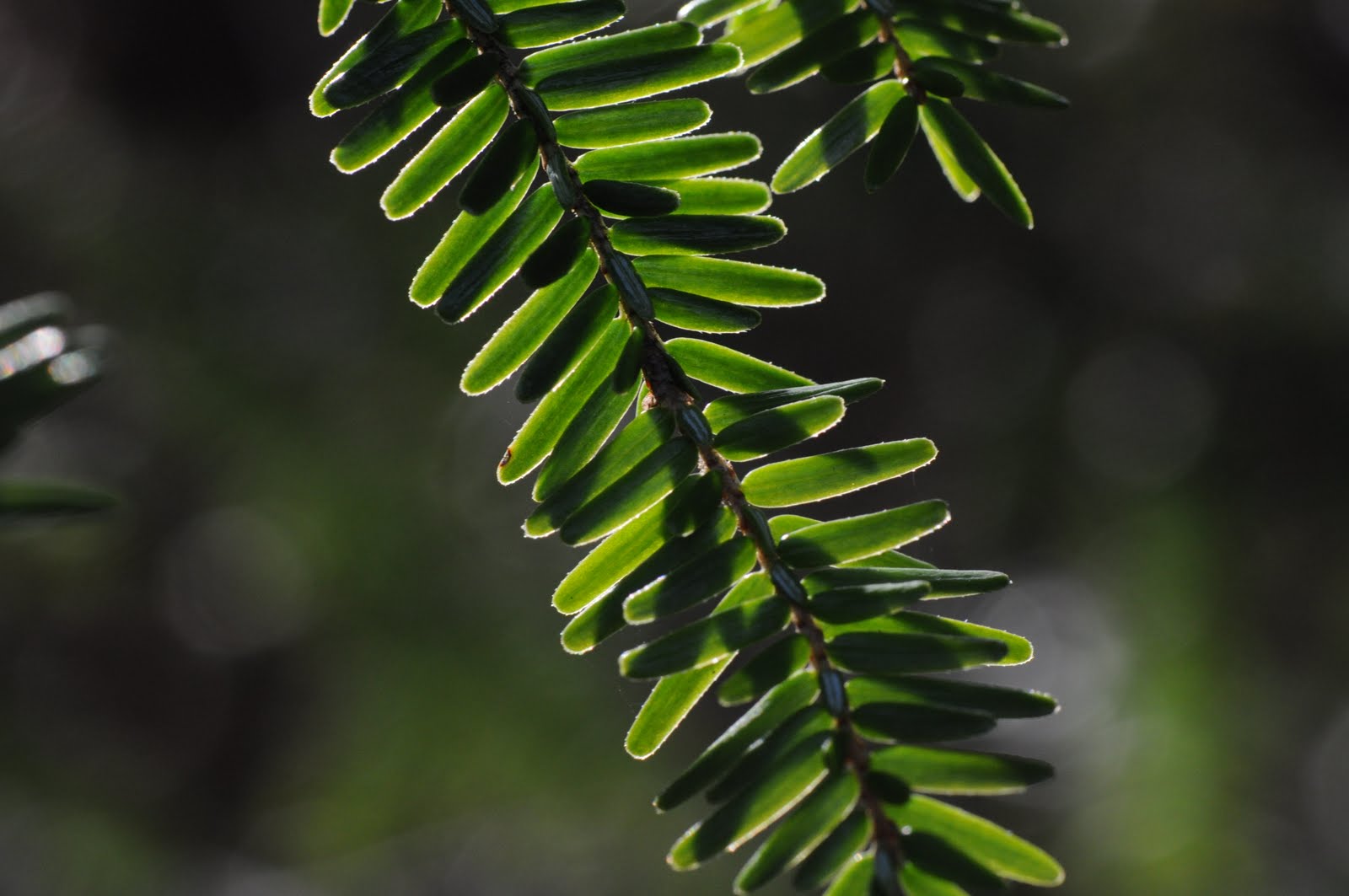
I love backlit leaves! This hemlock was a beautiful model.

Another Night in the Cold

Okay, I promise this is the last set of night sky photos...for a while.

I scoped out viewing locations on the golf course last night while walking the dog. The spots I thought would be good, weren't so hot, and I ended up in a very easily accessed spot, on a bit of a slope, with great views of Santanoni Mountain.

When 8:30 rolled around, I loaded up my gear. With my ISO set at 3200, I was able to take shots no longer than 15 seconds, which cut down immensely on the blurring.

The big dipper was glorious over Santanoni:


The Milkyway is always spectacular:


It was too early for Orion to be up, so I went back home to wait. About 10:30-ish I opened the back door to let the dog out in the yard, and Orion was up enough for me to get this shot:


At 1:30 AM Orion had gained enough altitude that Sirius, the nose of the constellation Canis Major, was visible. But, it was late, I was only up because the dog wanted to go out, and I wasn't about to set up the camera again. Maybe later in the winter when Orion rises earlier and Sirius is visible by 8:00 PM.

In fact, I find winter to be the best time for stargazing. I suspect it is because the atmosphere is clearer - low humidity. I've also read that pollutants are reduced in the winter sky. Whatever the reason, on a clear night in winter the stars are absolutely stunning. It is also the time of year when easily recognizable constellations are visible: Orion, the Dippers (although the Big Dipper is technically an asterism, an easily recognized shape that is part of a larger constellation, in this case Ursa Major), Cassiopeia. The only downside of winter stargazing is the temperature.