Do not zap dried tinder conks (Fomes fomentarius) for two minutes in the microwave. If you do, have a bucket of water handy to quench the resulting coal(s).
(The good news is that we now know we need smoke detectors in the building.)
Showing posts with label fungi. Show all posts
Showing posts with label fungi. Show all posts
Tuesday, July 17, 2012

Friday, August 27, 2010
Another Day on the Trails
It was just too nice to stay indoors, so I headed out on the Rich Lake Trail. Lately I've found something new each time I went, so I was looking forward to expanding my horizons.
First I had to photograph one of the squirrels who make our platform feeders a regular part of their diet. This poor little guy didn't know whether I was trustworthy or not. In the end, I left before he had to make the decision to leap or not.

Down along the first bit of shoreline there was a boulder with its own personal garden growing on its surface.
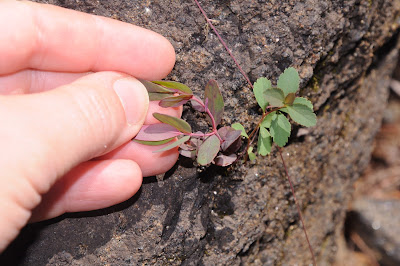 There didn't seem to be any soil at all in which these plants could've taken root, but a careful look at the base of the plants showed small cracks with just enough soil to make it possible.

All the recent rain was a gift for the mosses. Up until now they've been pretty crunchy, but today they were all lush and oh so green!

Another detour to the shoreline and I found shrubby cinquefoil in bloom. Potentilla. Very popular in gardens.

First I had to photograph one of the squirrels who make our platform feeders a regular part of their diet. This poor little guy didn't know whether I was trustworthy or not. In the end, I left before he had to make the decision to leap or not.

Down along the first bit of shoreline there was a boulder with its own personal garden growing on its surface.
 There didn't seem to be any soil at all in which these plants could've taken root, but a careful look at the base of the plants showed small cracks with just enough soil to make it possible.
All the recent rain was a gift for the mosses. Up until now they've been pretty crunchy, but today they were all lush and oh so green!

Another detour to the shoreline and I found shrubby cinquefoil in bloom. Potentilla. Very popular in gardens.

I should know what this one is, but it escapes me. I was very taken by the red veins, however, which stood out so beautifully against the green, like blood vessels. Try as I might, though, I just couldn't get a clear photo - the breeze was too strong.

We think this is a native phragmites, but we've never had confirmation from the state plant people.

It was all lit up beautifully by the sun, though.

 The winterberry fruits have formed. They'll turn bright red and look so beautiful come winter. Several birds will then consume them. How plentiful nature can be.

Mosses weren't the only plants rejoicing in the rain. The wintergreen was looking especially shiny and bright.

What could've made this mark on the cedar tree? It's very distinctive.

It was a log chain. This chain once held a boom that ran across the outlet of Rich Lake to keep the logs from floating downstream until "they" were ready to send them. This is the original chain, although we've losened it to give the tree a little more room to grow.


I love trees on stilts.

Came across this wonderful web, complete with spider sitting in the middle.
 Here's the top view of the spid:


We think this is a native phragmites, but we've never had confirmation from the state plant people.

It was all lit up beautifully by the sun, though.

 The winterberry fruits have formed. They'll turn bright red and look so beautiful come winter. Several birds will then consume them. How plentiful nature can be.
Mosses weren't the only plants rejoicing in the rain. The wintergreen was looking especially shiny and bright.

What could've made this mark on the cedar tree? It's very distinctive.

It was a log chain. This chain once held a boom that ran across the outlet of Rich Lake to keep the logs from floating downstream until "they" were ready to send them. This is the original chain, although we've losened it to give the tree a little more room to grow.

Okay - what is this?

I love trees on stilts.

Came across this wonderful web, complete with spider sitting in the middle.
 Here's the top view of the spid:
...and a view of the underside:


When I blew on the web, the spider scuttled very quickly up to the hemlock branch above, using on the front legs to climb; both back legs just went along for the ride. Hm - do all spiders do this?

View along the shore:


View along the shore:

I was very surprised to find turtlehead in bloom! It seems a bit late in the season, but these were in prime condition.
 Here's a close-up of the mouth:

Ever wonder what the inside of one of these flowers looks like? Well, I did, so I gently squeezed the edges. To my surprise, there was a "guest" inside!
 Here's a good look at the interior structures. It almost looks like a ribcage!

This poor frog was trying its darnedest to squish itself into the rocks and vanish.

 Here's a close-up of the mouth:
Ever wonder what the inside of one of these flowers looks like? Well, I did, so I gently squeezed the edges. To my surprise, there was a "guest" inside!
 Here's a good look at the interior structures. It almost looks like a ribcage!
This poor frog was trying its darnedest to squish itself into the rocks and vanish.

The pipewort was also rejoicing in the rain. All summer the flowers have been very small, but suddenly they are huge (by pipewort standards).

I was very surprised to see these: nodding ladies tresses. At least I think that's what they are. These are blooming now near my house, and they are one of the latest bloomers in the ladies tresses clan.
 I think what really threw me for a loop was how robust the plants were. The ones by my house are much more delicate.


I was very surprised to see these: nodding ladies tresses. At least I think that's what they are. These are blooming now near my house, and they are one of the latest bloomers in the ladies tresses clan.
 I think what really threw me for a loop was how robust the plants were. The ones by my house are much more delicate.
The leaves were visible, which should be another clue to the species.
 Nearby plenty more were getting ready to bloom. I'll go back and check them again later, just to verify the flowers.

Lots and lots of sundew, dewing what they dew so well. Y'know, I don't think I've ever actually seen one with a captured insect. Hm...
 There were also lots and lots of small white asters. Everywhere.
 Another little frog posed long enough for a photo. This one is a pickerel frog (the other was a green frog).
 I'm not sure what this plant is, but I was struck by the wonderful contrast between the green leaves and the red buds.

And I just really liked the colors here, the sun shining through the woods onto the striped maple leaves.

A couple kayakers were out enjoying the day, too.

My attention was first grabbed by the bloodred berry on the left, but then I also saw the spotted berries on the right. They are both Canada mayflowers, only the red one is ripe, while the others aren't quite yet.
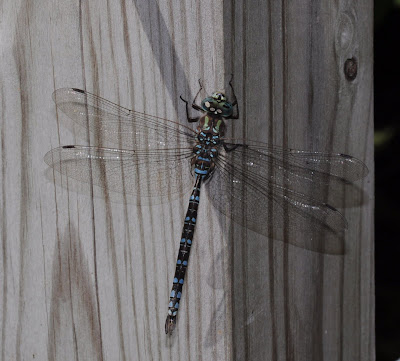
 I only saw a few dragon- and damselflies today. This one kept flitting about, as dragonflies will do, making it difficult to photograph. I believe it's a green darner, but my dragonfly books are not here at work. Will verify later.
 Nearby plenty more were getting ready to bloom. I'll go back and check them again later, just to verify the flowers.
Lots and lots of sundew, dewing what they dew so well. Y'know, I don't think I've ever actually seen one with a captured insect. Hm...
 There were also lots and lots of small white asters. Everywhere.
 Another little frog posed long enough for a photo. This one is a pickerel frog (the other was a green frog).
 I'm not sure what this plant is, but I was struck by the wonderful contrast between the green leaves and the red buds.
And I just really liked the colors here, the sun shining through the woods onto the striped maple leaves.

A couple kayakers were out enjoying the day, too.

My attention was first grabbed by the bloodred berry on the left, but then I also saw the spotted berries on the right. They are both Canada mayflowers, only the red one is ripe, while the others aren't quite yet.
 I only saw a few dragon- and damselflies today. This one kept flitting about, as dragonflies will do, making it difficult to photograph. I believe it's a green darner, but my dragonfly books are not here at work. Will verify later.
Finally, we have this gone-to-seed flower. It looks like an avens, but I'm not 100% sure. I'm hoping Jackie will know her seedheads as well as her flowers.
 I've included the leaves here, too, which also suggest avens.

 I've included the leaves here, too, which also suggest avens.
And that was today's Rich Lake walk. It's now time to go home and feed and walk the dog. It will be a beautiful evening for a good long walk.
Tuesday, April 20, 2010
It's a Small, Small World
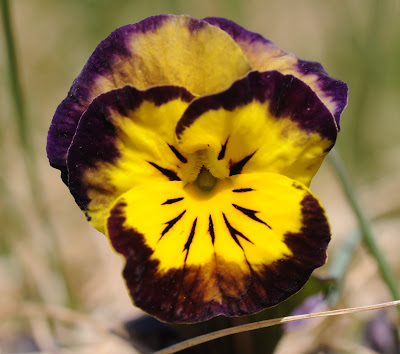
One day last week I was out weeding the veg garden (just in case) and noticed a splash of yellow on the lawn. At first I thought it was the first dandelion, but it was in fact this lovely viola.

Looking around, I saw several more in bloom or budding. Then I saw this purple-edged one. Look at those lines near the throat of both flowers - these are there to guide the bees into the flower for a sip of nectar. Don't be fooled though - it's all part of the flower's plan to get itself fertilized. Those stripes are like big neon arrows saying "Eat Here!"


I have no idea what they are, except very very small.
Here's another batch. Are they the same, or something different? If anyone as an idea, let me know!

Then there were these wonderful lichens - again, very, very small. They might be a species of Cladonia, but I wouldn't stake my life on it. The two species that I found that might be potentials are wand lichen (C. rei), and powdered funnel lichen (C. cenotea). Lichen experts, please chime in!

I think this is something else - another lichen, but a different one. Several of these had white tops...

...but futher examination indicated that it wasn't the top that was white, but the interior, which was showing through because the stem had been broken off.

There was also a nice green moss growing on the beaver's head, but none of the photos turned out well.
Slowly, so slowly, the beaver is being reduced to its component parts. One foot has entirely fallen off. The interior is mostly hollow (thanks to the ants). And now the exterior is being worked on by mosses, lichens and fungi. While I'm saddened to see my beaver disappear (it's tail vanished a few years back), it's kind of fun to see what is colonizing it during its decline. Nothing is permanent but change, eh?

Looking around, I saw several more in bloom or budding. Then I saw this purple-edged one. Look at those lines near the throat of both flowers - these are there to guide the bees into the flower for a sip of nectar. Don't be fooled though - it's all part of the flower's plan to get itself fertilized. Those stripes are like big neon arrows saying "Eat Here!"

Isn't this a great flower head? This is from last year's purple stachys. In the summer the bees love it, and even now it hangs on to its beauty. In fact, so many of last year's flowers left behind great skeletons that I thought I'd share some with you.

Garlic chives - large purple flowers, flattened and twisty leaves. Lots of seeds. It spreads rapidly, kind of like regular chives do. In other words, this is a plant to keep an eye on in your gardens.

Here's the dried flower stalk of verbascum. It's related to mullein, which is why it (maybe) looks familiar.

You can probably guess this one with relative ease: echinacea.

Garlic chives - large purple flowers, flattened and twisty leaves. Lots of seeds. It spreads rapidly, kind of like regular chives do. In other words, this is a plant to keep an eye on in your gardens.

Here's the dried flower stalk of verbascum. It's related to mullein, which is why it (maybe) looks familiar.

You can probably guess this one with relative ease: echinacea.

A few days earlier, I discovered some interesting things growing on my wooden lawn beaver. I've had this beaver for over 15 years - bought it in NJ. The years have not been kind to it; between the ants and the weather, its taken rather a beating. Still, up close, it has developed some very interesting communities.
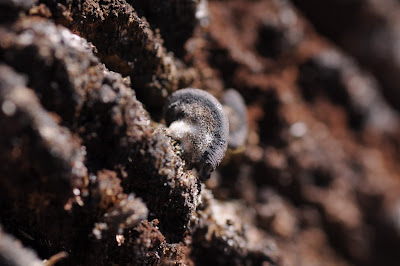
Like these tiny tiny mushrooms:

I have no idea what they are, except very very small.

Here's another batch. Are they the same, or something different? If anyone as an idea, let me know!

Then there were these wonderful lichens - again, very, very small. They might be a species of Cladonia, but I wouldn't stake my life on it. The two species that I found that might be potentials are wand lichen (C. rei), and powdered funnel lichen (C. cenotea). Lichen experts, please chime in!

I think this is something else - another lichen, but a different one. Several of these had white tops...

...but futher examination indicated that it wasn't the top that was white, but the interior, which was showing through because the stem had been broken off.

These brown lichens were interspersed with the pudgy "white-topped" ones. Are they part of the same species, or are they more of the first species, just brown instead of green-grey? It's a mystery. Whatever they are, they're small - as in only a very few millimeters tall.


There was also a nice green moss growing on the beaver's head, but none of the photos turned out well.
Slowly, so slowly, the beaver is being reduced to its component parts. One foot has entirely fallen off. The interior is mostly hollow (thanks to the ants). And now the exterior is being worked on by mosses, lichens and fungi. While I'm saddened to see my beaver disappear (it's tail vanished a few years back), it's kind of fun to see what is colonizing it during its decline. Nothing is permanent but change, eh?
Subscribe to:
Posts (Atom)