Showing posts with label trees. Show all posts

Thursday, May 5, 2011

Quadrillium - and an Abundance of White

 Yesterday I joined a group of nature enthusiasts for a drive to Goll Woods, a patch of "virgin forest" in northern Ohio.


Goll Woods is a rare treasure - a large plot of land that was purchased in the days when the midwest was being settled, and yet the owner, Mr. Goll, chose not to develop this parcel.  It remains one of the few original patches of Ohio forest left in existence. 


Goll Woods is lowland forest, along the Tiffen River, which this day was still flooding some of the trails.  As such, many of the plants here like to have their feet wet. One of the trees that's quite famous here is the burr oak, which grows to significant proportions (you'll see one shortly).  Apparently one blew over recently and the rings, when counted, aged the tree to over 500 years!


Goll Woods is noted on the internet and in wildflower circles as THE place to go for wildflowers.  It was, unfortunately, a rather cool and overcast day, so many of the flowers were closed, but this stretch of the Toadshade Trail was just carpeted with white trillium!


And nestled among the hundreds of tri-petaled flowers,


I found this four-petaled one!  Would that make it a Quadrillium?


Here is a tally of some of the other flowers we found this day:

 Dwarf Ginseng


Ohio Buckeye (a tree)


Toadshade (a new flower for me) - one of the trilliums


 Jack-in-the-pulpit


(and lots of Jacks just starting to unfold)


Early Buttercup (very soft and fuzzy stem)


Large-flowered Bellwort


A white trout lily!


Sharp-lobed Hepatica


Dutchman's Breeches (we also saw Squirrel Corn)


Miterwort (poor photo - sorry)


Nodding Trillium
Update:  we have some debate among members of the group as to which trillium this actually is.  
Some say nodding (T. cernuum), while others say drooping (T. flexipes).  The way to tell these two very similar species apart is to look at a) the petals - on nodding trillium they are strongly recurved (they bend backwards), whereas on drooping, they remain pretty straight, and b) the anthers- on nodding they are brown and on the drooping they are cream-colored.  Of course, my photo is of the wrong angle of this particular plant to really determine either. 


This lovely garter snake was nestled in the leaves and I almost stepped on it.  What was very odd about this reptile was that it was VERY warm!  The sun wasn't shining, so this perplexed us mightily  Could it have been warming up from the decaying leaves?  I find this not too likely - decay wasn't happening that fast.  Might it have been a female, and she was warm because she was gravid?  The body was quite stout.  Garter snakes are one of the species that give birth to live young (the eggs hatch internally), so this might explain the stoutness, and maybe even the warmth.  Hm...looks like I need to do a little more research.


Here is Jean next to one of the HUGE old burr oaks.  
Admittedly, Jean is vertically challenged, but even so, this is one big tree.
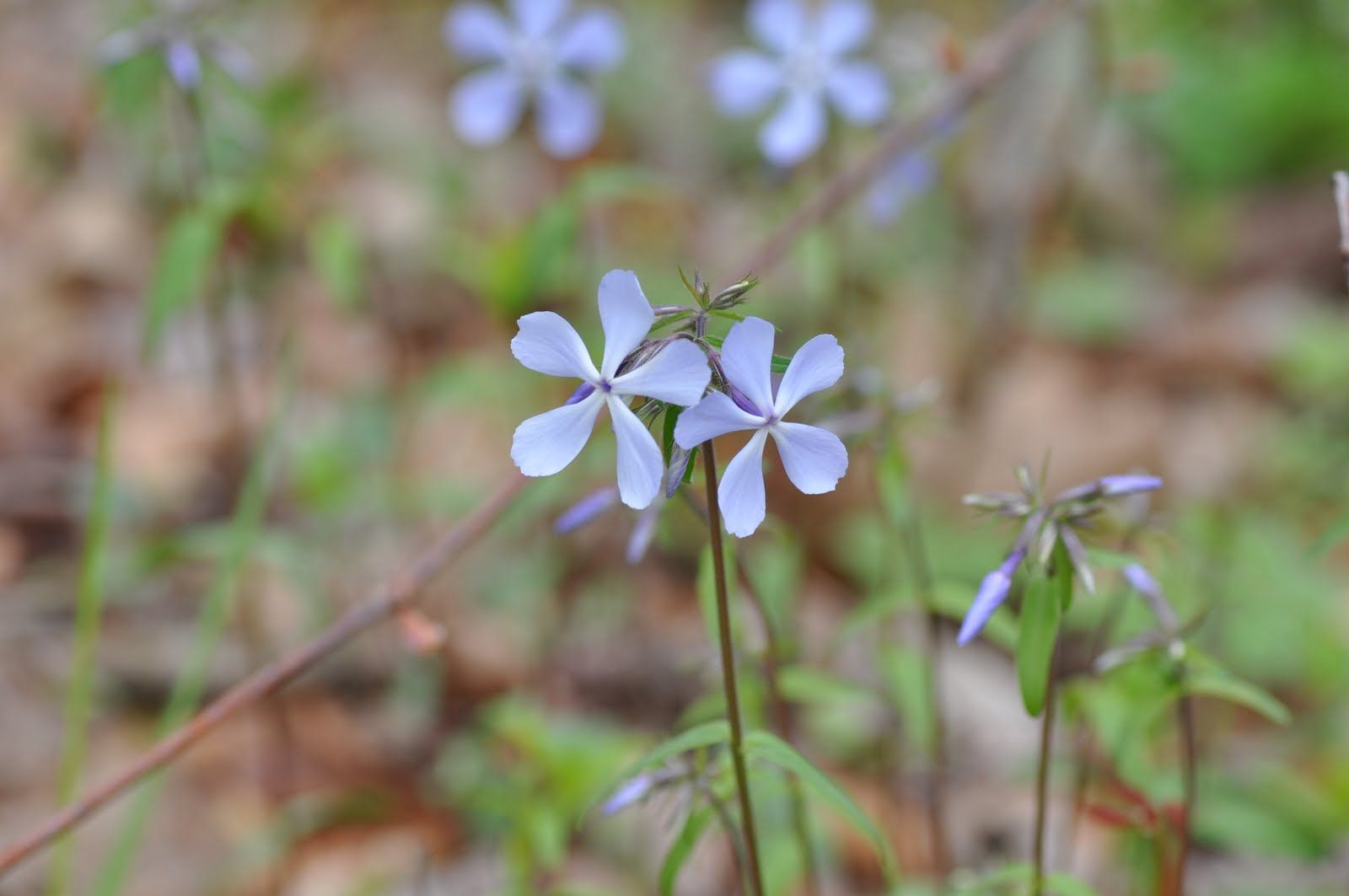

Wild Blue Phlox


Spicebush


White Clintonia - we think.  If so, another new plant for me.


Wild ginger with an itty bitty bud just to the left.


We came across this mystery violet.  Very long spur (see below), no hair inside the throat.

 Jackie - any ideas?  You are my violet go-to person!
Update:  Long-spurred Violet (Viola rostrata) - thanks, Jackie!

Mayapples were everywhere, but not blooming yet.  
This patch had some lovely mottled leaves.


A few wood anemone were hiding among the spring beauties.
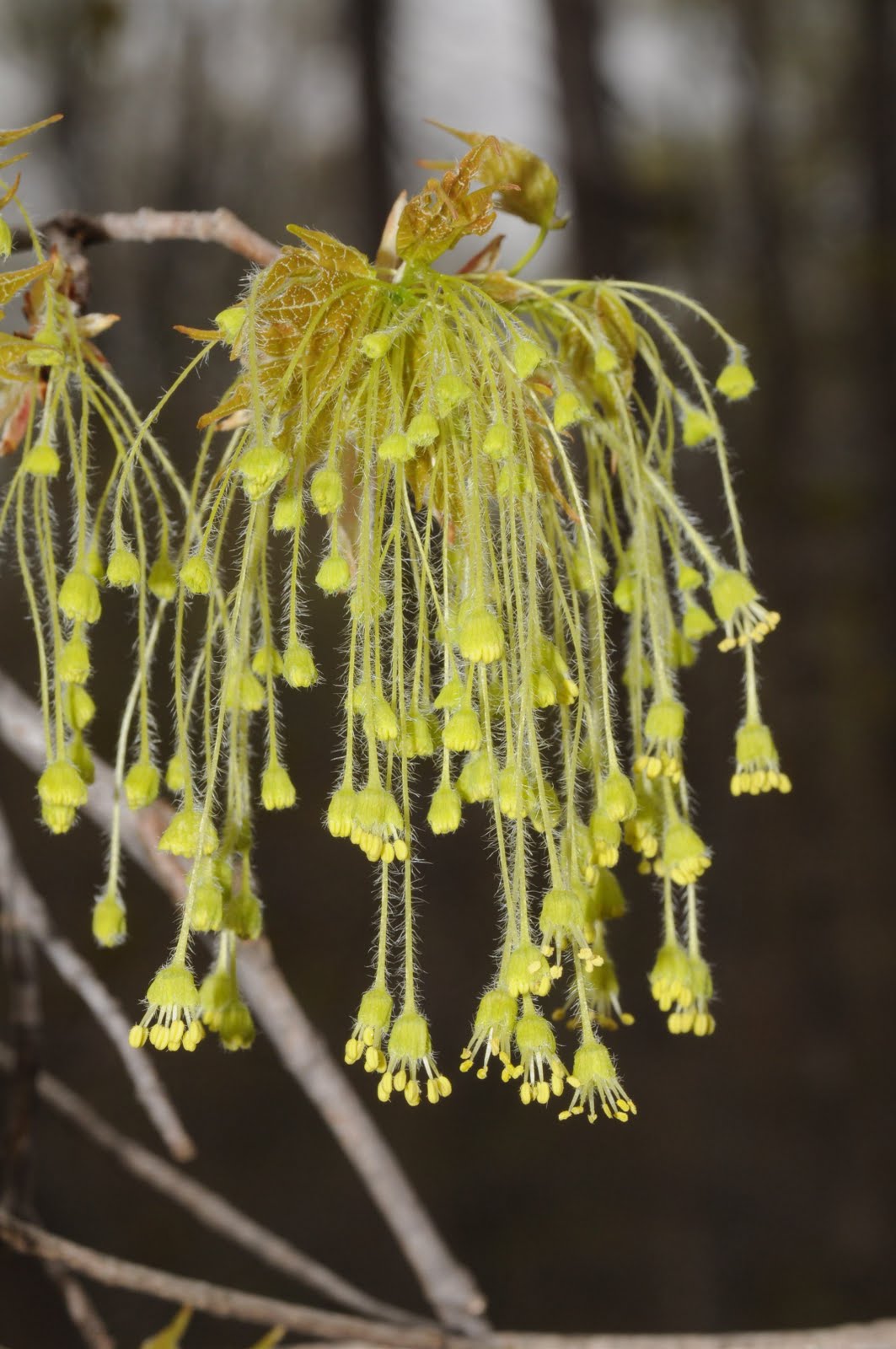

And Sugar Maples!  Not a tree I'd expect to see in a wetland, since they tend to prefer drier, rockier soils.  
I guess one just never knows what one will find when it comes to Mother Nature.

Monday, April 11, 2011

A Sticky Walk & A Forestry Project

 With such beautiful (if a bit too warm and humid) weather on hand, I couldn't just take Toby for our usual spin around the block last night.  We needed to go where we could enjoy trees and grass.  Off to MacCready we went.


 The last time we were here, things were rather snowy.  I couldn't wait to see it sans snow.  And maybe, just maybe, we might find some flowers blooming!


The first thing that caught my eye was this:  strange blue tubes in the woods.  What could it be?


I had my suspicions, so I went and peeked into one of the tubes.  Yes - there was a small tree in there.  Must be some sort of reforestation project.
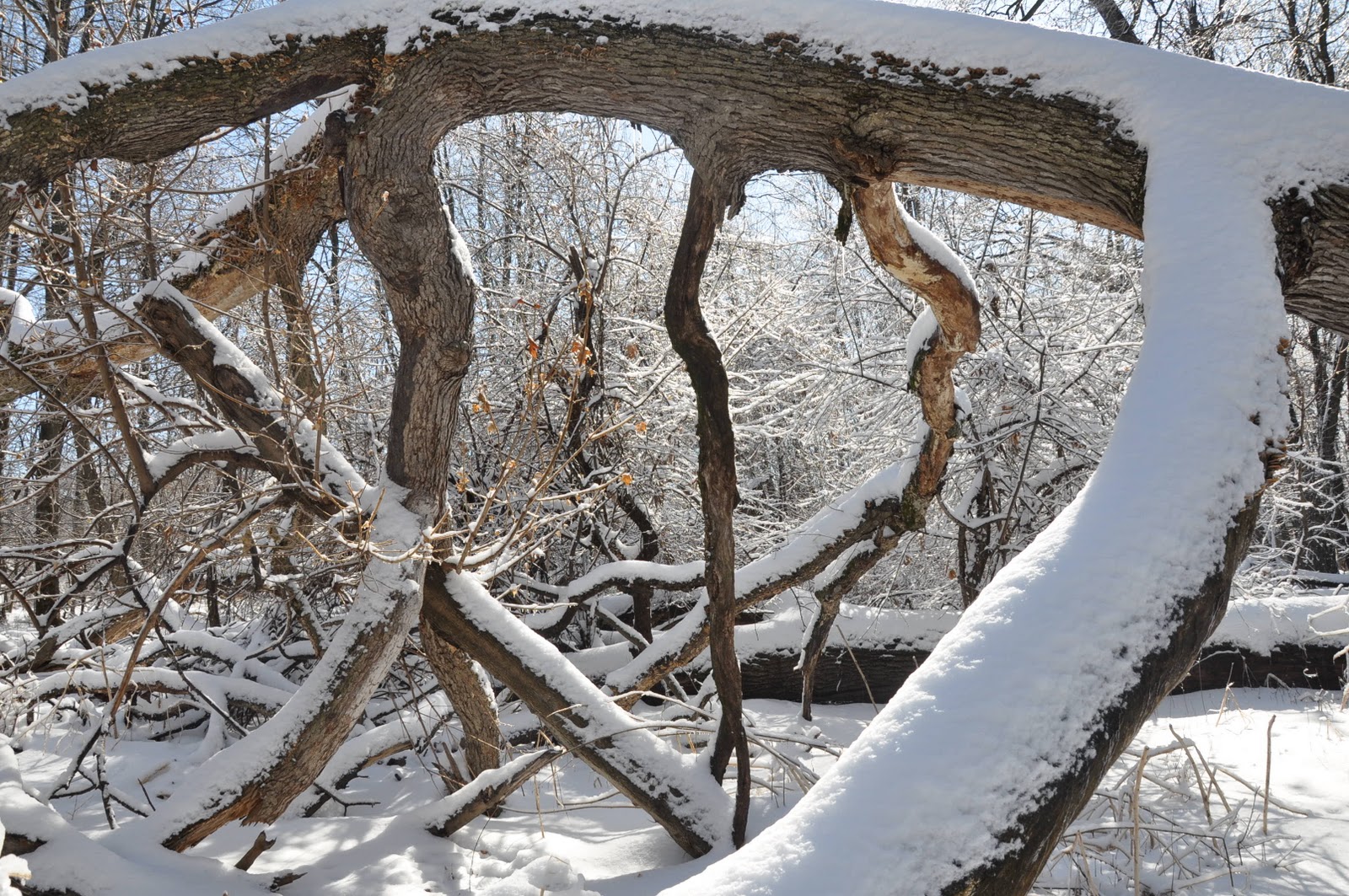

Instead of walking along the designated Red Trail, I decided to walk along this plot.  I wanted to know more.  Soon we discovered a section without blue tubes, but with individual seedlings tied with pink tape, behind a tall deer fence.  


Section by section, we noted a few changes - different colored tape,


tape and tubes, 


fencing and no fencing.
 

An idea began to form.  I suspected this might be a reforestation project looking at the impact of deer browse on seedlings, and ways to prevent it.  Between aggressive non-native plants, and voracious (and way too numerous) native deer, many native plants have a rough time getting established and growing.  I took at look at the mud at my feet - deer tracks.


I stepped into one of the unfenced portions and looked at one of the untubed seedlings - it showed classic signs of having been browsed.


A little further along, I found this collection of tree labels.  Swamp white oak.  I have been told that this tree is not doing well regeneration-wise.  It is part of the historic landscape in this part of Michigan, but other trees are filling the understory (like black cherry), preventing this tree from reestablishing itself.  Suppression of
fires in these fire-dependent habitats (oak savanna and prairie) allow these other trees to take over.  Add to this the browsing pressure of deer, and you have the same situation we face in the Northeast with sugar maples - their disappearance from the understory, and ultimately from the landscape.


And then I saw it.  Very tiny, but it was there - my first wildflower of the season.  It was vaguely familiar  When I got home I keyed it out:  Whitlow grass (Draba verna) - one I learned from my friend Jackie just last summer. Sadly, it isn't a native flower, but it was still nice to see it.


By 8:00 Toby was really showing the effects of the heat and humidity.  Our walk slowed to practically a crawl as we oozed our way around the trail.  I think we were both glad to see the trailhead and come back home.  I had taken a bottle of water along, and we both made use of it, but it was good to get back where water flowed freely in bowl and glass.  I, at least, got to take a refreshing shower.  Poor Toby had to settle for finding a cool bit of floor to lie upon.

Thank goodness the wind kept up.  This was, however, a harbinger for "something" in the weather, and around, oh, 2 or 3 AM, "it" hit - a rip-snorter of a storm.  Closing the windows helped keep the din to a more tolerable level, but the thunder must've been right above us.  Thankfully we only had to endure a very few crashes before the wind swept the storm further northward.  This morning it is almost hard to believe the amount of rain that came pelting down only a few short hours ago.  And the temperature is once more back to normal. Ahhhh.

Tuesday, February 22, 2011

And the Sun Rises

 The thing about blizzards and terrible weather is that when the sun finally comes back out, the world is so very beautiful.


The deer went out on the frozen stream and dug a small hole 
to get to the water...we don't know why, for the stream was running
free just a short distance away.


The ice was catching the sun and flashing back brilliant crystals of color.
The camera wouldn't catch them...unless I took it out of focus: 


What a great day to be a naturalist!


I glanced up and saw a yellow ball in the tree.  Do you see it?


It's an oak apple, one of the many many types of galls that form on 
oak trees.  I will do a post about these soon...you will see
how fascinating they are. 


Buds on the prickly ash - a brilliant rusty orange.


Now there's a Christmas Tree with real Icicles!

More to come in the next post:  Ice on Flowers.