Thursday, June 26, 2014

Day Five - The Long Drive

It dawned yet another beautiful morning.  


Today we were bound for The Long Drive - over 200 miles from Tupper Lake to Tahawus, Fort Ticonderoga, up along Lake Champlain, through Elizabethtown, and back to Tupper.

Our first stop was The Blast Furnace up at Tahawus.  The last time I was here it was just the furnace sitting on the side of the road with the remains of the wheelhouse behind.  Wow!  What a difference now!  Not only is there a parking area, there are railings, interpretive signs, and a trail!


I keep forgetting just how big the furnace is.  It is impressive.


Like clowns in a car, or students in a phone booth, we wanted to see how many people we could get inside.


 In the end only three opted to give it a go; way to go Libby, Pam and Jean!!!


 And what is inside?  Only the coolest view up the chimney!


OH, so what is the blast furnace and why does it now have all sorts of interpretive stuff?  See my previous blog here.

Meanwhile, there's this other structure one can see from the road that goes up to Tahawus.  I've driven by it many times and often wondered what it was.  So, last week I sent an email back to Newcomb to ask a friend - what is this?  Turns out this was the site of a saw mill, once upon a time, known as Ward's Mill, and this structure was "the incinerator used to burn excess/slag pieces of lumber from the saw mill."  Another mystery solved - thank you Charlotte and Paige!


 After we left Tahawus, we stopped at the Adirondack Buffalo Farm for baked goods and to look at the bison - and there were babies!


I'd forgotten about the waterfalls until we were on the road.  Of course!  Stop at the waterfalls - it is so seldom one encounters a waterfall of such beauty and ease to access!  So, we pulled over at the Blue Ridge Falls.


It took little encouraging to convince the group to walk down the trail to the water.


I love this little pothole, made by the small rocks swirling around as the water rushes by.


Then we were off to Fort Ticonderoga.


Quite a number of our group was keen on early American history, so this stop was a must.  It was early in the season, so there weren't a lot of costumed interpreters on hand - basically three.


I was fascinated by the handles on the canons.  Each one was different, but I won't bore you with every shot I took!   You won't see such beauty and cleverness put into weapons today, that's for sure.


The staff had the hearth going.  This was new since the last time I was here, and kind of neat!


The day was getting very warm and humid; the coolest place was in this tunnel, which was funneling a lovely cool breeze!


The three staff put on a musket demonstration for the crowd.


There's so much history at this location.  it was already a major "military" site by 1609, when Champlain and his Algonquin allies fought the Iroquois here.  Then there was the French and Indian Wars in the mid-1700s, when Fort Carillon was built (and later renamed Ft. Ticonderoga), and finally the Revolutionary War, nearly 20 years later. 


Just down the hill from the Fort is (are?) the King's Gardens.  When we got there, the first thing we saw was this osprey nest and the parent birds flying around.


A vegetable garden targeting children is located outside the wall of the King's Gardens.


Complete with itty bitty kid-sized Adirondack chairs!


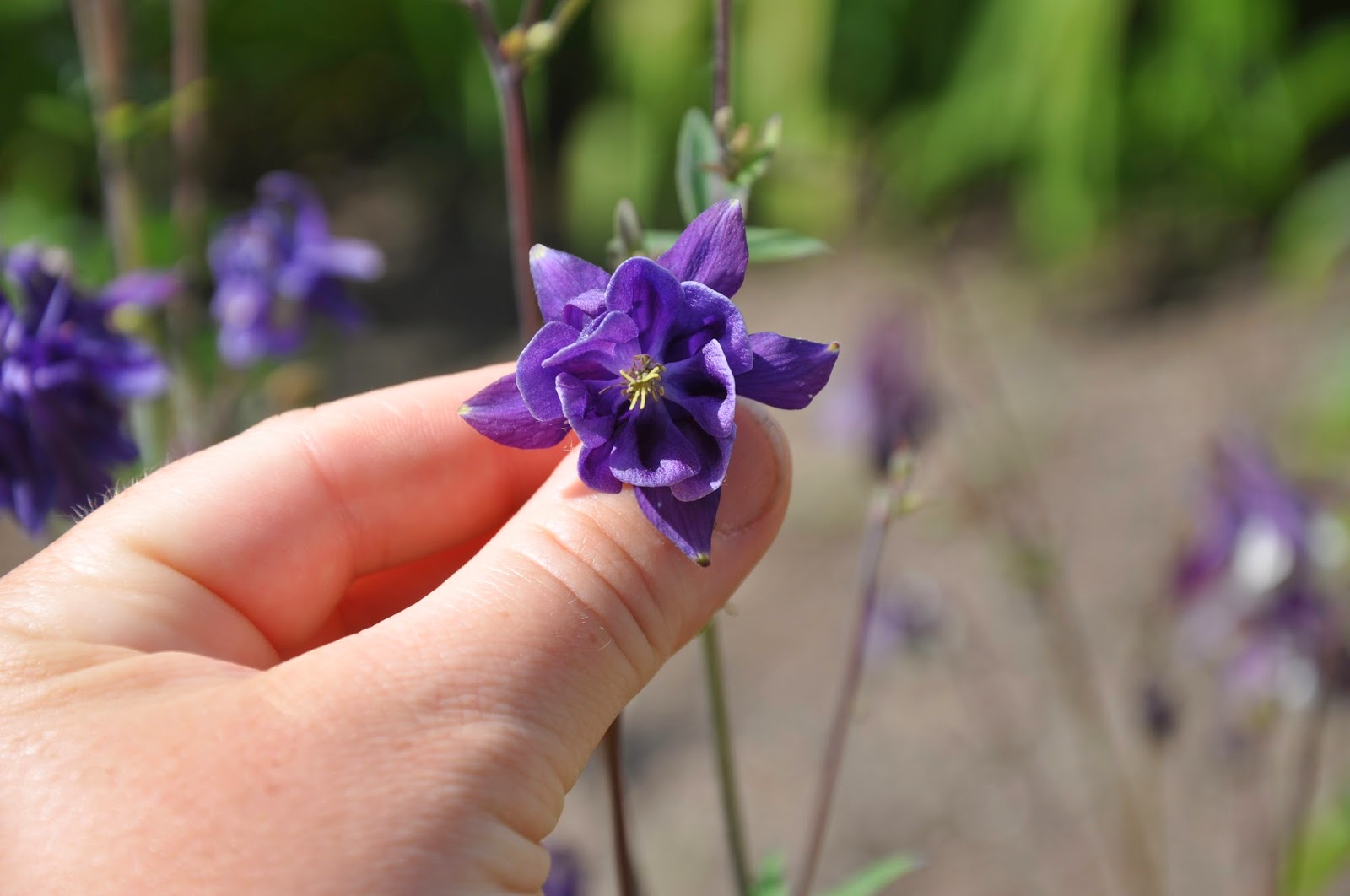
I've decided that I am quite taken by columbines.  I may have to start a collection.


The Gardens also had some amazing irises.


The house at the Gardens is not in good condition.  Hopefully they will find the funding to restore (or at least stabilize) it before it is too late.


A lot of care has gone into these gardens.  I learned that contemporary garden design (of that time, not today) put blue and purple flowers by the house because they are cool colors, and the reds, oranges and yellows further away because they are hot colors - apparently this helped give people a feeling of being cooler when at the house.  Hm.


It was mid- to late afternoon by the time we left the garden.  When we got to Port Henry, we stopped at Stewart's for ice cream - I've been waiting for that moment for three-and-a-half years!  Yum!!!  And it was a perfect hot day for ice cream.
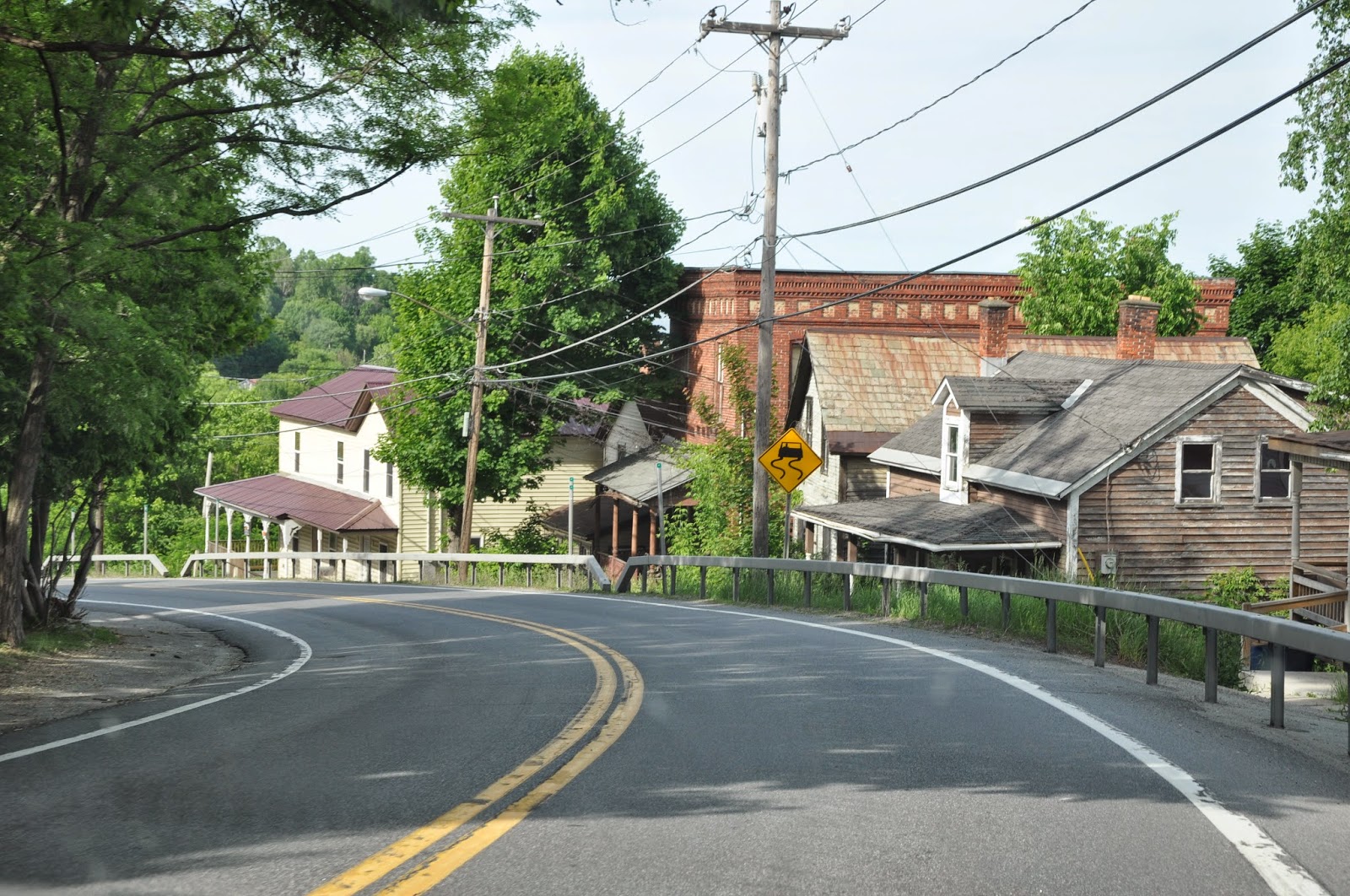

Our drive took us up through Elizabethtown, and then down the long hill back to 73, and on to Lake Placid, Saranac Lake and Tupper Lake.  


Day Four - The Great Adirondack Birding Celebration

It was difficult to sleep in in the mornings.  There was the excitement of the day ahead, but also sunrise came at a "normal" time - it was fully light by 5:00 AM.  It's one of the things I miss in Michigan.  So, several mornings I found myself up and out by the lake, watching the fog lift and the day begin.


Today was the big birding day for our group - we were headed for the morning bird trips at the Great Adirondack Birding Celebration based at the Paul Smiths VIC (it still goes by that name).  Some of our group went to Bloomingdale Bog to get boreal birds:  black-backed woodpecker, gray jays, boreal chicakdees.  Two of our group went to Henry's Woods only to discover, unbeknownst to us, the trip there had been cancelled; they gallantly went on their own!

The rest of us were headed for Wilmington and Whiteface Mountain in search of the rare Bicknell's thrush.

It was a glorious morning, and at 5:30 there was little to no traffic.  We were able to stop and take photos of the Ausable River without worrying about getting run over by cars or cyclists (it was an entirely different story by noon).


We gathered with other Bicknell's hopefuls at the base of Whiteface, where we met up with our trip leaders, John and Pat Thaxton.  I know the Thaxtons from my time on the board of High Peaks Audubon.  Good people - they know their birds!


While we waited for everyone to arrive, put on bug repellent and work out carpooling arrangements, I was taking in the architecture and neat weather vane at the gate house.  To drive up Whiteface (the Veterans' Memorial Drive), one must pay a toll.  After driving it, I feel they should've paid us - the road is in terrible condition and is, fortunately, being reworked this summer.


So, here we are at our first stop.  Those black smears are IFOs - Identified Flying Objects, identified as black flies.  Yes - this was the worst place for black flies this whole trip.


According to the bird experts, Bicknell's thrushes like these rocky slides - openings that cut through the forest.  And sure enough, we did see and hear our first BT here.


Yes - those are all black flies on his back.  And this just proves that they are drawn to blue.  Word to the wise:  don't wear blue.


Our next stop was next to some lovely  rock walls,


with some fantastic views.  That's Lake Plaice, the actual Lake, not the village, which isn't located on Lake Placid.


Our third stop along the Memorial Highway was another old slide.  And sure enough, we saw the Bicknell's again...more than once (or maybe it was more than one bird).


And there it is:


At that stop we also had a yellow-bellied flycatcher and a Swainson's thrush.  My photos of both are not good enough to publish, though.

Next stop we were above the trees.  Here's the view out toward Vermont.  Lake Champlain is out there, but hard to discern in the haze.


A winter wren serenaded us from the top of this fir.  This is rather unusual behavior for this bird, but we were to discover some more unusual bird behavior,


 like this boreal chickadee, which normally just doesn't come this far up the mountains.  But on a whim someone played the boreal's call and bingo - out popped this fella.  Poor photo, but I just don't have a good long lens for taking distance bird shots.


The views were amazing, despite the haze.  Here you can see part of the Memorial Highway below us.


The Castle is the famous lodge at the top of the mountain.  As you can see, renovation work is underway on the road. Most of the group stayed at this level, where they caught another sighting of a Bicknell's thrush.


A couple others and I opted to climb at least partway up toward the weather station at the summit.  We didn't have time for us to go all the way up, and while part of me wishes I had, I am glad that I got to at least get this far up Whiteface - I never visited while I lived here.


After a brake-burning trip back down the mountain, we headed to the Paul Smiths VIC for the catered lunch that was part of the GABC.  Then we had a whole afternoon ahead of us to play with.  The group that had gone to Bloomingdale Bog did not get to see a boreal chickadee, and that was on the Bucket List of one of our participants, so several of them and some of the Whiteface group headed back to the bog to try again.

The rest of us stayed at the VIC and walked the Boreal Life Trail.


A few painted trillium were still in bloom,


and we saw some lovely clusters of yellow clintonia.


Pink lady's slipper abounded, both in bud, 


and full bloom.


I was very excited to see this lovely pile of coyote scat - it was like meeting an old friend!  Coyote scat was as common as fleas on a dog when I lived in Newcomb; now I never see it.  I can't say the rest of our group was excited about this find as I was.


 We climbed the observation tower at Barnum Pond, where we also got to chat with the Thaxtons again, catching up on the news since I've been gone.


 This trail is noted for the 1/4-mile boardwalk through the bog, which enables visitors to really get out into this special wetland and experience it.


 Again, I was hoping we might see some of the orchids, like white-fringed, but we were still too early for them.  We got to see some of the plants we'd already seen at Spring Pond Bog, like cotton grass,


and pale laurel.


One different flower was there:  buckbean.  Isn't it just delightful with all those long fuzzy hairs?  They must serve a purpose, but I don't know what.


By the time we reached the end of the trail, the group was pretty well ready for a rest, so we got back in our vehicles and headed back to Tupper Lake.  It had been a good day.